
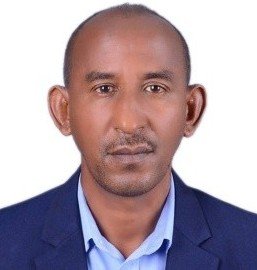
- Mesfin G/kidan(PhD)
- +251980-154010
- mesfin.geberekidan@uog.edu.et
- Field and Laboratory-workshop Directorate Director
Dear Colleagues, I am writing to you today with a sense of purpose and enthusiasm as the director of the Field and Laboratory-Workshops Directorate. We are setting out on a ten-year mission to transform the University of Gondar into Ethiopia’s leading research institution, known for its impactful field education, practical skill development, cutting-edge infrastructure, and—above all—its highly qualified and committed human resources. We have a clear vision: devoted to excellence to establish a university where theory and practice coexist together, enabling our students to become scholars, creative problem solvers, and leaders in their areas. All of us—faculty, staff, students, and administrators—must work together to achieve this goal.
Our curriculum will be completely redesigned to prioritize research exercises, real-world projects, and hands-on learning. This necessitates spending money on modern tools, cutting-edge technology, and creative instructional strategies that promote flexibility, critical thinking, and creativity. In order to develop varied and significant research experiences, we will also establish solid collaborations with businesses, governmental organizations, non-governmental organizations, and community groups. These internships will give our students priceless chances to put their research into practice, hone their professional abilities, and advance our country.
The directorate is dedicated to creating and maintaining cutting-edge labs, workshops, and field facilities that adhere to global standards. This entails making investments in state-of-the-art equipment, establishing secure and motivating learning environments, and guaranteeing sustainable practices. From a human resources standpoint, we will invest in the training and development of our teachers, academic technical Assistants, Staff and the community around the university in particular, as well as the external stalk holders in general, since we recognize that our people are our biggest asset. This entails offering opportunities for ongoing professional growth, encouraging a collaborative and innovative culture, and drawing in top people from all across the nation.
Supporting experiential learning, research, and real-world application across the various colleges and institutes within the University of Gondar—which include the social sciences, natural and computational sciences, business and economics, medicine, and the Institute of Technology—is a critical function of the Field and Laboratory/Workshop Directorate. Its main duty is to guarantee the accessibility, security, and effective administration of field resources, labs, and workshops in order to support top-notch instruction and study. It serves as the main location for all research and hands-on learning materials, supporting the university’s aim of academic excellence and significant research in all fields.
To generate highly competent graduates and greatly expand our knowledge of research views, the field and laboratory workshop directorate cultivates a culture of safety, creativity, and collaboration. In order to improve laboratory and workshop management practices, facilities, human resources, and other laboratory and workshop inputs, the university’s higher officials are currently closely monitoring the establishment of this director and coordinators across each college. These coordinators’ primary goal is to support teaching and learning, research, and practical education.
The institution of Gondar’s overarching goal is to develop into an independent research institution with competitive national and international quality and relevance standards in its academic, research, and community service endeavors. The University of Gondar features eight workshops and around 110 labs. The directorate office centrally oversees and supports these labs and workshops, which are owned by departments, colleges, and schools. The following perspectives could be used to assess the office’s contribution.
1.Teaching-Learning Activity
For the benefit of academic staff, researchers, students, and other university stakeholders, the directorate office supports and oversees the majority of the laboratories and workshops.
2.Research Activity
Numerous researchers, academic staff, undergraduate and graduate students, and other university stakeholders have taken part in a range of research projects to address the problems facing the community and the country at large. These could be achieved through suitable and well-equipped laboratories and workshops. In light of these conditions, the office is working to supply the tools and space required for the university’s workshops and labs.
3.Community Service Based Activity
Another objective of the institution is to plan and carry out community service. Workshops, problem-solving research exercises, and skill-building training can all help achieve this. As a result, the office is able to coordinate and offer several laboratory and workshop-based trainings and services that are beneficial to the communities both inside and beyond the university.
4.Field Education
In order to ensure that students receive worthwhile, real-world experience that enhances their academic studies and equips them for prosperous careers in their chosen fields, the Field Education the Office plays a crucial role in developing, managing, and supervising the field education program. In order to close the gap between theory and practice, the primary coordinator’s job is essential. The office is in charge of providing students with opportunities for meaningful experiential learning, fostering their personal development, and guaranteeing the program’s overall efficacy and quality. Through industry-university linkage, the field trip also strengthens ties between the university and the larger community, benefiting both students and the organizations they support.
5.Current Infrastructure
Currently, the University of Gondar has eight workshops, more than 40 computer labs, and more than 70 laboratories. The departments, colleges, or schools have approved these labs and workshops. They offer a wide range of services and outreach to researchers, B.Sc./M.Sc. and PhD students, and external clients, such as governmental and non-governmental organizations.
Director of the field and laboratory workshop (FALD) is in charge of the university laboratories’ follow-up activities. The director oversees technical operations and supervision in laboratories, workshops, and field instruction. Additionally, the director is responsible for establishing suitable guidelines and making efficient use of laboratory and workshop resources while providing students and other stakeholders with high-quality services. The director approves rules and regulations and promotes accountability, ownership, and safe usage of labs and workshops. The director is in charge of creating and overseeing a thorough the program that makes use of and manages effective field education, laboratory, and workshop techniques.