UoG focuses on one of Ethiopia’s top priorities: the GERD
Today on the 10th of June 2021 the University of Gondar’s School of Law organized an International Conference that focused on the Grand Ethiopian Renaissance Dam. The conference that catered to international water law, dispute resolution and sovereignty lasted the whole day and allowed the University Community to stay tuned via a live stream through the internet.
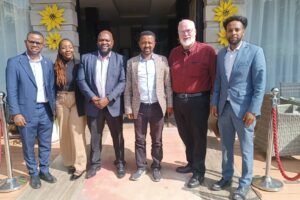
The day saw some of the more prominent members of the negotiating team coming together at Goha Hotels conference hall. Those who were present, among others, included Prof Afwerk Kassu, State Minister of MoSHE, Dr. Asrat Atsedeweyn, UoG President, Dr. Aregawi Berihe GERD NPPCCO, Dr. Abriha Adugna, State Minister of MoWIE, Ambassador Ibrahim Idiris and Prof Yacob Arsano from AAU.
The Grand Ethiopian Renaissance Dam which is scheduled to be completed by 2023 will be the largest hydroelectric dam in Africa and the 8th largest in the world. With an installed capacity of 6,000 megawatts, it is projected to lift 80 percent of the country’s population out of darkness. Though it is a sign of great development and pride for the country of Ethiopia, downstream countries have been trying their best to derail the progress that has been made and are attempting to permanently handicap Ethiopia’s overall development. That is why such conferences are vital. It will allow scholars and intellectuals to get on board and chart a new course of action that is of the interest of this country of over 115 million.

When speaking on the occasion Dr. Asrat Atsedeweyn the President of the University of Gondar expressed his delight and optimism for the GERD project and UoG’s contribution to sustainability. “We at the University of Gondar are working practically to create a better environment for downstream countries and build a better relationship for future generations,” expressed Dr. Asrat.
The University of Gondar has partnerships with various Sudanese universities and multiple staff members are currently in Sudan getting an education. In addition to this he alluded to a partnership with Gedareef University that will host Sudanese students at UoG to learn Amharic and the hosting of UoG staff in Sudan to learn the language of Arabic. “This,” he said, “will increase cooperation and trust between the two countries.”
Dr. Asrat also stressed the need to understand that Ethiopia is not a country who will back down from its rights and its privileges. “Rivers are a uniting factor only when there is justice and equitable sharing,” said Dr. Asrat, “and for all those who have been trying to force the hand of Ethiopia they need to know that we will not tolerate it.”

On the other hand when speaking in his keynote address, Dr. Aregawi Berihe who is a part of the GERD tactical structure felt it necessary to bring up the strong back bone of all Ethiopians. He shared that the GERD is the story of Ethiopia’s independence and sovereignty. He expressed that the independence and freedom of this country is being tested from within and from without so the future is destined to be an uphill battle. But when speaking on the solution, he said there is only one. “If the world comes against Ethiopia,” he said, “if we focus on our unity we can defeat and overcome any obstacle that is set before us.”
Dr. Aregawi also shared that it was a blessing in disguise to not get financial backing for the Dam from major financial institutions. He expressed that with the reality that Ethiopia had to complete the task with its own funds and own personnel it somehow created a new spirit of work and independence that allowed Ethiopia to focus on its own development without depending on others. “This project is a sign of Ethiopians taking responsibility for their own mega projects and not using the AID or loans from other nations that will only make us a dependent,” stressed Dr. Aregawi.

The day also saw intellectuals present power point presentations on issues that are relevant and timely. Some of the titles included GERD and its political implications, Egypt-Ethiopia bilateral relations, GERD and its filling and securitization of the negotiations.
Ethiopia is a country that needs the benefits of the GERD now more than ever. With the population by 2050 set to grow to 230 million and with high levels of poverty (21%) Ethiopians are clearly in need of some much-needed development and opportunities. But with the Sudanese and Egyptians trying their best to endanger the hopes of Ethiopia’s dream things may get worse if the intellectual class doesn’t step up and find solutions to the more pressing issues.
According to Professor Yacob Arsano (AAU) if the negotiating perspectives focuses on enhancing uninhibited water development, mitigates drought, overcomes poverty, allows negotiations with downstream countries and keeps to the principles of equitable and reasonable use and management while not causing significant harm to downstream countries Ethiopia will have some leverage and acceptance in the talks. But if the talks do not progress with those principles Ethiopia will only be left with a concept coined “BATNA”, which will effectively mean operating in a unilateral way because of unacceptable cooperation from the downstream countries.
55% of all Ethiopians do not have access to electricity and 23% don’t have the access to safe drinking water. The GERD project is of the highest priority for the Ethiopian government and many struggling citizens are waiting to see life changing development in the coming years. With that being said though the University of Gondar continues to be at the forefront in some of the more pressing issues of today and is bringing together problem solvers to leave a more sustainable country for future generations.