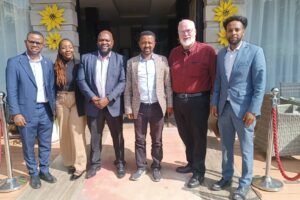
UoG organizes a National conference on Election 2021
The University of Gondar’s School of Law on 21 May 2021 organized a national conference on the upcoming national elections. With creating an academic atmosphere in mind the School invited representatives from various government organizations and opposition parties. Those who were invited included H.E Dr. Samuel Kifle, State Minister of MOSHE, National Election Board of Ethiopia representatives, philosopher and scholar Dr. Dagnachew Assefa, Dr. Asrat Atsedeweyn University President, numerous scholars and invited guests.

The national election to be held in the coming weeks has a lot of people talking. Various analyst and spectators allude to it, symbolically, being the first time Ethiopia will have a chance to experiment with democracy. For the past 27 years, in previous elections, it was clear that opposition parties were merely place holders and symbolic only allowed to show their distaste for the government through debates, but did not have the right or privilege to win key government positions. Though the elections 2021 is yet to commence, people believe this year will be a bit different.


Dr. Asrat Atsedeweyn in his opening address to the audience expressed his pleasure with the School of Law and those in attendance for paying close attention to such an event. Upon sharing the fact that in the past week UoG had invited opposition parties to debate in a televised appearances which increase the tradition of democratic practices, he expressed elections alone will not solve all of the problems the country faces. “For there to be a equitable Ethiopia which represents all of us,” Dr. Asrat stated, “we need to strengthen the institutions which govern us and all work towards a tradition of free and fair elections”.

On his part Dr. Samuel Kifle expressed that Ethiopian democracy doesn’t have to mirror western democracy. “Ethiopia will soon have an election and its democracy will be tested for the better,” said Dr. Samuel, “but we will not build a democracy like Washington, London or Brussels, but we will create our own democracy incorporating our own cultural and traditional backgrounds.”
It has been recent news that some countries are trying to meddle in the internal affairs of Ethiopia. With those statements that have been made by some international organizations and few foreign governments Ethiopians of all shades have showed their distaste. With that in mind when closing Dr. Samuel ended by sharing that outside actors cannot and will not influence Ethiopian elections and that Ethiopia will never be “for sale” or compromised because of its rich and prideful history.

The country of Ethiopia will soon face a test that will set the foundation for the next couple of years or even decades. Election 2021 has the ability to set a new path for this country of over 110 million inhabitants and could chart a course towards unbridled prosperity, or eventual catastrophe. One thing is clear though and that is many still are skeptical about what the future holds. Dr. Dangachew Assefa illustrated in his keynote speech that Ethiopia has come a long way in its political history (from the Middle Ages until modern day Ethiopia) but through its ups and downs change always comes (for the good and for the worse) when it comes to its self-governance. One thing is for certain though and in the coming weeks all will get the chance to know the answer to these perplexing concerns that people have.
The event, with its academic scope intact, also focused on a number of linking topics that have great significance to future elections and the way forward. Presenters took the stage to present papers that included titles related to conflict trends and challenges for elections, the role of the judiciary, aspiring roles of civil societies, election and post-election conflict and lessons and best practices for the upcoming election 2021.